US Department of Energy Initiatives Supporting Software Defined Vehicle with Green Software Engineering
Key Tools for Green Vehicle Software
Add bookmark
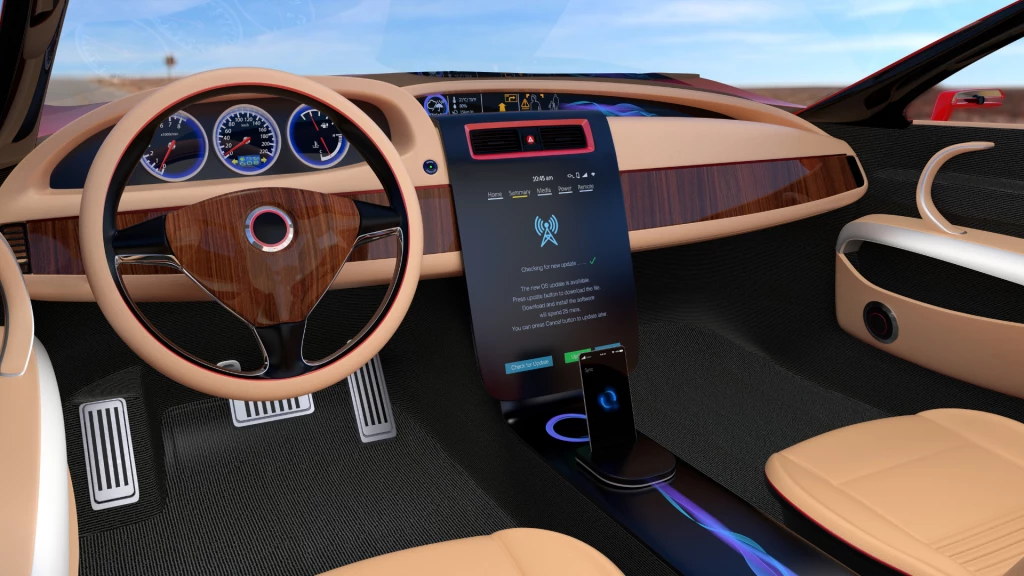
Software Defined Vehicles represents a fundamental shift where a car's features and functions are primarily enabled through software and is playing a vital role in advancing support to align with goals from the United States Department of Energy (US DOE). In the view of Green Software Engineering, the US DOE looks at Software Defined Vehicle as a critical lever to help reduce carbon emissions by optimizing how vehicles use energy, which is responsible for over 26% of the United States US greenhouse gases. Software-Defined Vehicles reduce environmental impact by shifting the vehicle's "intelligence" through software rather than hardware changes.
What is Software Defined Vehicle?
A Software Defined Vehicle is an automobile where core functionality is controlled and continuously improved through software updates, representing a paradigm shift in automotive engineering from mechanical engineering to cars being a platform for software. This shift is strategically important for the US DOE because software can be updated remotely, meaning energy efficiency improvements can be deployed across entire fleets without modifying hardware. The software updates can be accomplished through over-the-air (OTA) by avoiding the dealership visits. This is directly relevant to green software engineering: the carbon cost of a physical recall or hardware upgrade is eliminated, replaced by an OTA patch.
Software-Defined Vehicle Benefits Supporting the US DOE Initiatives.
Key features of SDVs
- OTA updates
- Centralized computing systems
- Data driven optimization
- Integration with cloud and edge systems
OTA environmental benefits:
- Reduces manufacturing replacement parts
- Lower embodied carbon
- External vehicle lifespan
Integration with smart grids environmental benefits:
- Reduces carbon intensity with charging
- Improves renewable energy utilization
Support for electrification goals environmental benefits:
- Optimizing charging strategies (less charging cycles)
- Improving battery life by battery management (prolonging e-waste generation)
Reduced lifecycle emissions environmental benefits:
- Optimizing charging strategies (less charging cycles)
- Manufacturing phase (fewer hardware upgrades required)
- Operational phase (improved energy efficiency)
- End-of-life phase (longer usable lifespan)
Department of Energy USA alignment: The US DOE promotes vehicle efficiency improvements, and Software Defined Engineers allow continuous optimization without redesigning hardware.
Key US DOE Tools for Green Vehicle Software
The Vehicle Technologies Office (VTO) supports a variety of initiatives to lower the cost and increase the opportuneness of Plug In Electric Vehicle (PEVs). The VTO is team up with national laboratories and industry to improve batteries and electric drive systems.
Source: US DOE
GREET (Greenhouse Gases, Regulated Emissions, and Energy Use in Transportation): Argonne National Laboratory has been developing GREET since 1915, in combination with several private industries and the VTO. There are two models or types available – GREET 1 and GREET 2.
GREET 1 is for a fuel cycle model that allows users to estimate well-to-wheel (WtW) energy consumption for over 100 fuel types and around 80 vehicle technology options. WtW is a term used to calculate energy consumption to produce, distribute, and operate a vehicle, covering everything from raw energy extraction (well) to propelling the vehicle (wheels).
GREET-2 is for a vehicle cycle model that allows users to calculate energy consumption for the full vehicle manufacturing cycle from material recovery to recycling.
Green Light Optimal Speed Advisory (GLOSA) at U.S. DOE contributes to intelligent transportation system technologies designed to reduce vehicle energy consumption and emissions. This is done by advising drivers on the optimal speed to pass through traffic lights during the green phase.
Key Aspects of GLOSA Research
System Functionality: GLOSA uses Vehicle-to-Infrastructure (V2I) communication to receive Signal Phase and Timing (SPaT) messages, informing the vehicle of traffic light timings.
Fuel Savings: GLOSA can achieve substantial fuel savings, with reductions of up to 35.7% for individual vehicles.
Emission Reduction: GLOSA significantly reduces pollutant emissions, including CO2 (by up to 27.94%), NOx, and CO, by reducing the frequency of starts, stops, and intense accelerations.
Technology & Optimization: Research involves using advanced algorithms to predict traffic light allowing for better speed advice even with adaptive traffic lights.
Autonomie is a state-of-the-art vehicle system simulation software developed by Argonne National Laboratory (ANL) for the U.S. DOE VTO. It is used to design, analyze, and evaluate the fuel efficiency, performance, and cost of advanced vehicle technologies, ranging from conventional cars to electric and fuel cell vehicles.
Summary Block Diagram: SDVs, US Department Of Energy, and Green Software Engineering.
Source: US DOE.
Summary of the US DOE Strategy