Inverter Validation at Real Electrical Power
Explore key use cases for inverter validation at real electrical power with high-fidelity e-motor emulation.
Add bookmark
Shorter development cycles and frequent software releases increase the need to perform relevant inverter validation tasks earlier in development. Yet inverter testing often depends on the availability of the physical e-motor and surrounding system hardware. When prototypes are delayed or not mature, parallel development can be limited, while parameter variations and critical failure scenarios can be difficult to reproduce consistently.
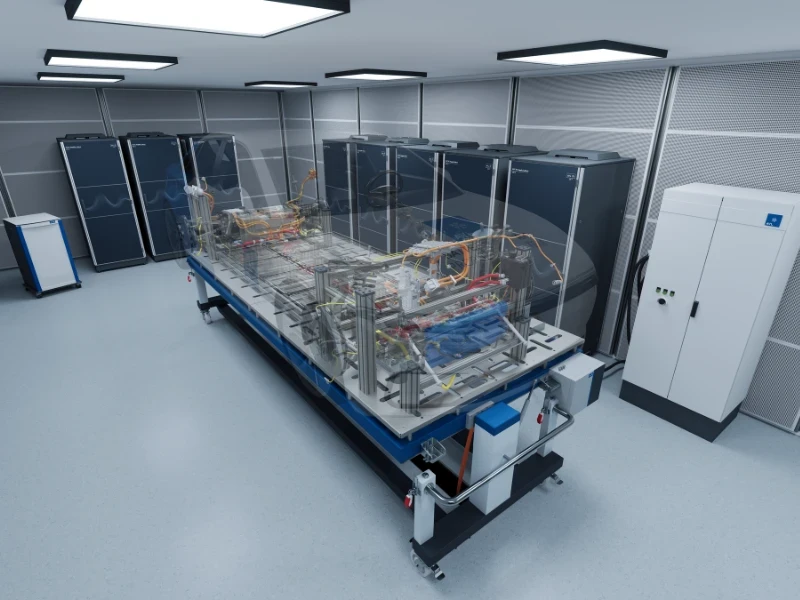
Dedicated inverter testing at real electrical power can reduce these dependencies. By emulating the e-motor and battery environment, engineering teams can test inverter functionality, operating conditions, motor parameter variations and failure scenarios in a controlled, reproducible electrical test environment without requiring a complete physical drivetrain.
This use case guide explores four typical development challenges:
- Concurrent Engineering: Accelerate inverter development by validating hardware and software before the physical e-motor and gearbox become available.
- Inverter Control Strategy Optimization: Investigate how inverter control influences electric powertrain efficiency under relevant electrical operating conditions.
- Handling E-Motor Manufacturing Tolerances: Validate inverter performance across expected e-motor production variations and identify opportunities for wider manufacturing tolerances and lower production costs.
- Testing Inverter Failure Handling: Identify and resolve failure-handling issues earlier while reducing validation effort, prototype dependencies and associated costs.
The guide also provides an overview of the validation capabilities and system setup behind high-fidelity e-motor emulation. Discover how these approaches can support earlier inverter validation while reducing dependency on complete physical powertrain availability.