
20th - 21st October, 2026
Marriott Munich Hotel, Germany
Expert Resources | Automotive Cyber Security Europe 2026
New Insights

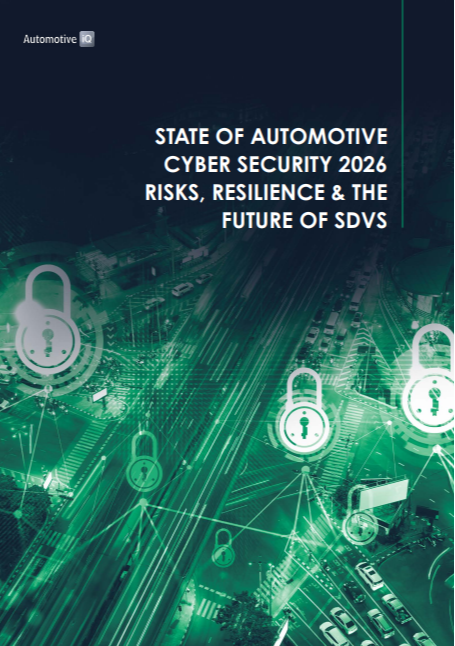
State of Automotive Cyber Security 2026 - Risks, Resilience & the Future of SDVs
Discover the latest trends and developments in automotive cyber security with our State of Automotive Cyber Security Report 2026.
The report explores emerging risks, strategies for building resilience, and the evolving future of software-defined vehicles. This comprehensive overview examines how AI is being used to strengthen cyber security and accelerate SDV innovation, how organisations are reducing costs while improving operational efficiency, and the key strategies for securing next-generation vehicles. It also provides an in-depth look at the current OEM landscape and the challenges manufacturers face.
You will learn essential regulatory insights, including updates on ISO 21434, GB 44495, the Cyber Resilience Act, and the European Product Liability Act, helping you stay ahead of the rapidly changing compliance environment.

A Practical Approach to Compliance - Exclusive Interview with Pawel Brzeziński at HARMAN
In this exclusive interview, Pawel Brzezinski, Senior Manager - Head of HARMAN AES Cybersecurity Domain at HARMAN, shares practical approaches effective for managing and complying with multiple frameworks simultaneously. He highlights the importance of cross‑functional collaboration in achieving regulatory compliance, and best practices he has seen work particularly well. Pawel explains how he sees the landscape evolving over the next five years, focusing on the emerging requirements in markets like China, India, and South Korea, and what challenges OEMs are likely to face as regulations continue to develop.
Regional Cyber Security Frameworks
An Exclusive Interview with Dr. Mathias Dehm, Chief Product Security & Privacy Officer, AUMOVIO.
As new automotive cyber security and compliance regulations continue to emerge across China and India, Dr. Mathias Dehm shares his perspective on how these evolving frameworks are likely to influence the global automotive industry and what steps OEMs and suppliers should be taking today to prepare. In this interview, he explores the key regulatory requirements organisations must consider when expanding into international markets and explains how companies can embed compliance considerations early in the development lifecycle. Dr. Dehm also offers practical advice for organisations navigating the increasingly complex regulatory landscapes in China and India, highlighting the most common compliance challenges companies face and the strategies that have proven most effective in overcoming them.
Overview of Chinese Cyber Security Regulation GB 44495-2024 | Past Presentation
Paweł Brzeziński, Head of Cyber Security Services Domain at HARMAN, presented at Automotive Cyber Security, Connectivity & SDV Week 2025. Get exclusive access to his presentation to explore:
- Key milestones and timelines for GB 44495-2024
- Technical cybersecurity requirements and implementation deadlines
- Additional actions required beyond UNECE R155 compliance
Paweł also provides you with practical guidance on what you must implement in addition to R155 to ensure full regulatory readiness.
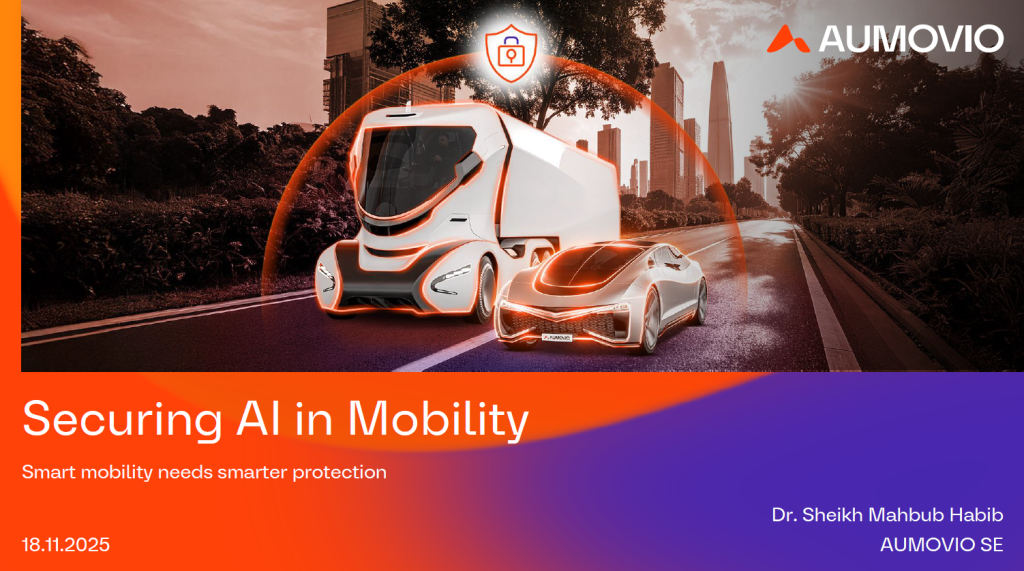
Securing AI in Mobility | Past Presentation
"Smarter mobility needs smarter protection."
An exclusive look at a previous presentation by Dr. Sheikh Mahbub Habib, Head of Product Cybersecurity and Privacy Innovation at AUMOVIO, delivered during Automotive Cyber Security, Connectivity & SDV Week 2025.
Download and you will discover:
- AI-enabled cybersecurity: incident response and continuous monitoring
- Defense strategies against evasion attacks: detection and prevention techniques
- AI-related cybersecurity regulations and standards
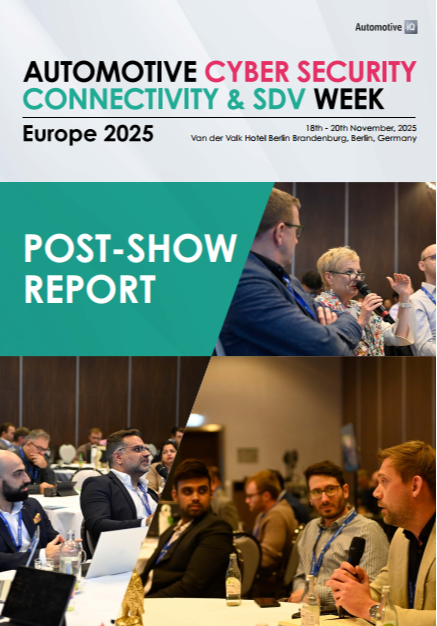
Post-Show Report 2025
Automotive Cyber Security, CV and SDV Week 2025 delivered strategic intelligence and high-quality technical case studies addressing the industry’s most critical challenges. This report highlights the key takeaways and insights from the event, including exclusive findings from onsite polling.
Tables of Contents:
- Thank You From Automotive IQ
- Here's What You Missed
- Exclusive Poll Results
- 2025 Audience Breakdown
- Hear From Past Attendees
- 2025 Event and Media Partners
- 2025 Speakers
- An Interview with Finite State - Are We Secure, Everywhere?
Download now to access the full report and gain actionable insights from industry leaders and event highlights.

Early Attendee Snapshot | Automotive Cyber Security Europe 2026
Download the Early Attendee Snapshot and take a look at who's signed up so far to be in the room at Automotive Cyber Security Europe 2026!
Attending organisations include: Bentley Motors, BMW, Ferrari, JLR, Volkswagen and many others
Download your copy to see the full list 👉
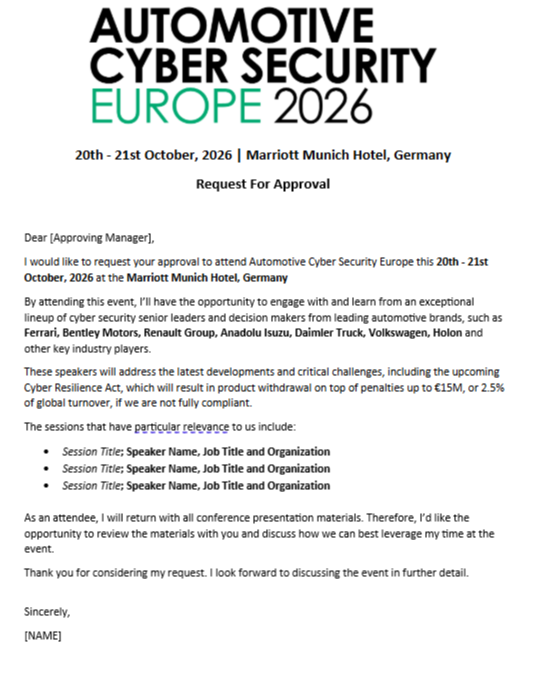
Convince Your Boss | Automotive Cyber Security Europe
With the upcoming Cyber Resilience Act, it is more important than ever for cyber security experts to be present at Automotive Cyber Security Europe 2026 to take back the insights, strategies and new industry connections needed to help navigate the upcoming changes with confidence.
We understand that limited budgets might be holding you back from attending, which is why we've created a request for approval letter to help you convince your boss and create a business case to approve your attendance.
Download your complimentary copy and just amend your details.
From The Archives
Security and Monetisation for SDV Architecture
This snippet from the 2025 State of Automotive Cyber Security, Connectivity & Software‑Defined Vehicle Report highlights consumer willingness to pay for SDV capabilities and reveals how leading OEMs are shaping their SDV monetisation strategies. Read now to discover the next wave of security innovations powering future SDV architectures - from zone control units and advanced encryption to real‑time operating systems and built‑in system redundancy.
The Latest in Automotive Regulations
Download to explore the latest shifts in automotive regulation, from ISO 21434 (including insights into its upcoming edition) and China’s GB 44495 cyber security regulation, to ISO/SAE CS PAS 8474 for road vehicles. You’ll also get a clear breakdown of key European legislation such as the Cyber Resilience Act, the European Product Liability Act, and the EU Data Act, and learn how these evolving frameworks are reshaping compliance, risk management, and innovation strategies across the automotive ecosystem.
Expert Insights, Strategies and Real-World Applications Shaping the Next Era of Automotive Technology
The Automotive IQ team has curated our most popular and most‑read interviews into an exclusive resource bundle, featuring:
- Danil Prokhorov, Research Manager, Toyota Manager R&D, North America
- Tomasz Werocy, Product Cyber Security Compliance Officer, Volvo Buses
- Dr. Sheikh Mahbub Habib, Head of Cyber Security & Privacy Innovation, Continental
- Charalampos Alexiou, Product Security Incident Response Specialist, Scania Group

No AI, No Future: How the Automotive Industry Must Evolve - Now
Learn from MHP – A Porsche Company experts Augustin Friedel and Prasanth Gowravajhala in this forward‑looking interview, where they share insights from their work with OEMs and Tier 1 suppliers as they navigate the complex transition to software‑defined vehicles.
Augustin highlights the expanding role of AI across the entire development lifecycle, while Prasanth unpacks the technical and organisational challenges of shifting from domain‑based to zonal architectures - underscoring the need for strategic investment, cross‑functional talent, and agile transformation to stay competitive in the SDV era.
Quick-Fire Interview With Zeeshan Naeem, Thought Leader, AI & Cybersecurity for Autonomous and Connected Mobility
Ahead of Automotive Cyber Security, Connectivity & SDV Week 2025, Automotive IQ interviewed Zeeshan Naeem to explore AI security in autonomous vehicles. Zeeshan, who has nearly a decade of experience in automotive cybersecurity and autonomous technologies, discusses the ground-breaking advancements that are enhancing cyber security, such as AI-driven predictive threat detection, federated learning and quantum-resistant cryptography.
Download now to discover Zeeshan's vision for the cyber security landscape over the next decade and what industry leaders need to prioritise when building cyber-resilient autonomous vehicles.

Scania Group’s Approach to Enhancing Vehicle Security
Automotive IQ interviewed Charalampos Alexiou, Product Security Incident Response Specialist at Scania Group to find out more about Scania Group's comprehensive approach to safeguarding vehicle security, including advanced threat intelligence and vulnerability management.
This interview provides you with insight into:
- Challenges faced by OEMs in adapting to the evolving threat landscape.
- Steps Scania Group has implemented to enhance vehicle and product security.
- The importance of building technical capabilities in threat intelligence and vulnerability management for vehicle manufacturers; urgency and speed of implementation.

Whitepaper: Navigating Cyber Security Regulations in the Automotive Industry – Emerging Standards in China
As vehicles become increasingly connected and autonomous, the automotive industry faces a growing challenge: how to ensure the security of its data-rich systems. This whitepaper delves into the evolving landscape of automotive cyber security regulations, with a particular focus on China’s rapidly developing legal framework.
In this comprehensive report, you’ll find:
- A Global Overview of Cyber Security Regulations: Explore key global standards such as the EU’s Cyber Resilience Act, UNECE R155/R156, and the U.S. NIST Cyber Security Framework, and how they impact the automotive industry.
- Focus on China’s Regulatory Environment: Learn about China’s National Cyber Security Law, Data Security Law (DSL), Personal Information Protection Law (PIPL), and specific vehicle standards like the “Technical Requirements for Vehicle Cyber Security.”
- Compliance Strategies for OEMs: Get practical insights into how OEMs can align with emerging regulations in China and globally, including recommendations for navigating data security challenges and managing vehicle lifecycles.
- Strategic Outlook: Understand the future of cyber security in the automotive sector, the pressures OEMs will face to meet upcoming deadlines, and the potential impact on global market dynamics.
Whether you're a manufacturer, supplier, or industry stakeholder, this whitepaper provides essential guidance on maintaining compliance and strengthening cyber resilience in an era of rapid technological advancement.
In Partnership With:

QUESTIONS?
Address: IQPC Ltd, 129 Wilton Road,
London SW1V 1JZ
Telephone: +44 (0) 113 210 042
Fax: 44 (0) 207 368 9301
Email: enquire@iqpc.co.uk

©2026 IQPC. All rights reserved.