
March 18 – 19, 2026
Sheraton Ann Arbor Hotel, Ann Arbor, Michigan
New for 2026
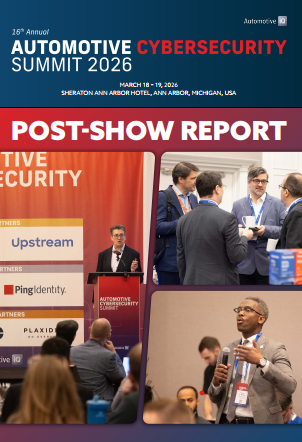
Post-Show Report 2026
A must-read snapshot of the trends, perspectives, and data shaping the future of automotive cybersecurity.
Download the Automotive Cybersecurity Summit 2026 Post-Show Report for an exclusive breakdown of everything that shaped this year's gathering. Inside, you'll find a detailed recap of the event's core themes, industry challenges, and featured speakers who shared lessons and practical strategies for navigating an increasingly complex landscape. The report also showcases our event partners, and access to exclusive poll results captured live during the sessions, revealing what your peers are prioritising at the moment and where major gaps still exist.
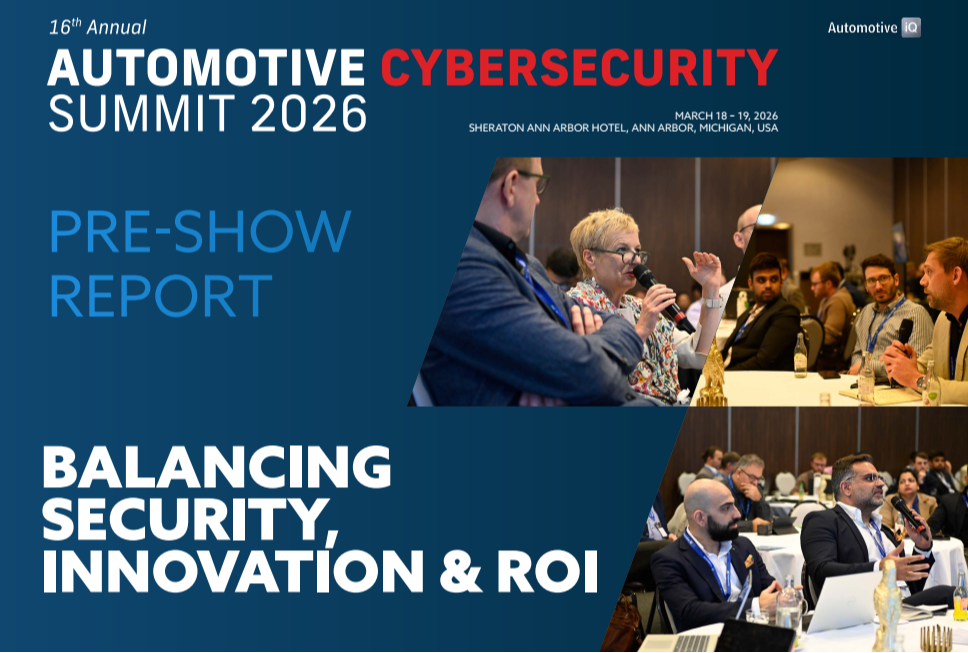
Pre-Show Report 2026
Automotive IQ has compiled a report to share the key highlights for the upcoming 16th Annual Automotive Cybersecurity Summit 2026, previewing the topics and professionals shaping the future of automotive cybersecurity.
Tables of contents:
- Welcome
- 2026 Key Topics
- Who Could You Meet?
- Partnership Opportunities
- 2026 Speakers
- Speaker Interview with Beth Linker, Chief Product Officer, Finite State
This year's theme: Balancing security, innovation & ROI.
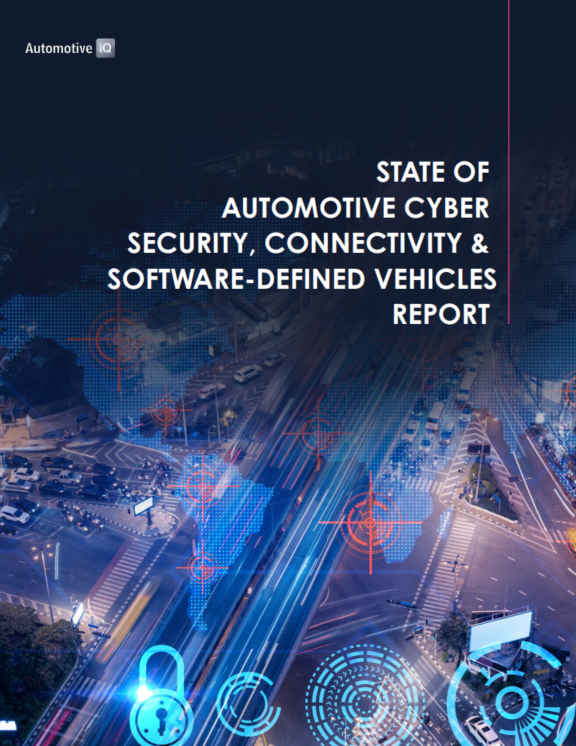
Global State of Automotive Cybersecurity, Connectivity & Software-Defined Vehicle Report
Discover the latest trends and developments in cyber security, connectivity, and software-defined vehicle innovation with our Global State of Automotive report.
This comprehensive overview explores how AI is being leveraged to enhance cyber security and SDV advancements, how companies are cutting costs and improving efficiency, strategies for securing next-generation vehicles, and the current state of the OEM landscape. You'll also gain valuable regulatory insights, including updates on ISO 21434, GB 44495, the Cyber Resilience Act, the European Product Liability Act, and more.

Reframing Cybersecurity in Automotive
An exclusive interview with Vivek Venkatachalam, Senior Director, Vehicle and Connected Cybersecurity, Ford Motor Company.
Vivek shares insights on how cybersecurity leaders can shift the narrative to position security as a source of competitive advantage and business value. He also discusses practical approaches for maintaining cyber resilience as budgets tighten, and how the automotive industry must evolve its cybersecurity strategies to stay ahead of emerging threats, especially under increasing financial pressures.
"Invest our energy in enabling people and creating an environment where security is everyone's responsibility, not just because they must do it, but because they want to do it."
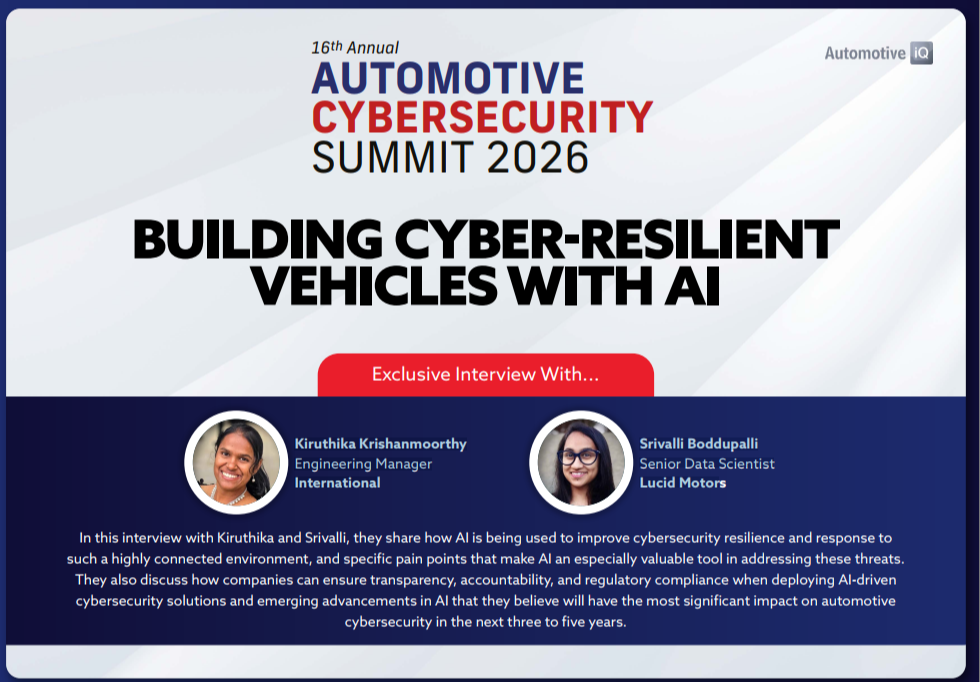
Building Cyber-Resilient Vehicles With AI
In this interview with Kiruthika Krishanmoorthy, Engineering Manager at International and Srivalli Boddupalli, Senior Data Scientist at Lucid Motor (views are their own), share how AI is being used to improve cybersecurity resilience and response to such a highly connected environment, and specific pain points that make AI an especially valuable tool in addressing these threats. They also discuss how companies can ensure transparency, accountability, and regulatory compliance when deploying AI-driven cybersecurity solutions and emerging advancements in AI that they believe will have the most significant impact on automotive cybersecurity in the next three to five years.
SBOM and HBOM Requirements: The Future of Automotive Cybersecurity
In this interview, Pawel Brzezinski, Senior Manager - Head of AES Cybersecurity Practice & Cybersecurity Domain Lead at Harman, shares insights into the immediate impact of SBOMs and HBOMs following the U.S. Department of Commerce mandate banning Chinese and Russian technology in vehicles. He also discusses the specific requirements OEMs should be prepared to meet when creating and presenting SBOMs and HBOMs for automotive systems. Pawel explains how cybersecurity teams can use SBOM and HBOM data to support threat analysis and risk assessments, particularly for safety-critical components, and outlines the key developments that will shape future expectations around SBOMs and HBOMs.
Leveraging AI for Automotive Cyber Security and SDV Development
As AI becomes integral to the rapid evolution of automotive cybersecurity, it is transforming how manufacturers detect and mitigate threats in real time. This article shares practical ways to integrate AI into product development to strengthen and advance cybersecurity frameworks. Key areas include real-time threat response, secure decision-making, adaptive learning, and enhanced virtual testing environments. It also covers key use cases of AI in software development, highlighting testing processes and decreasing costs.
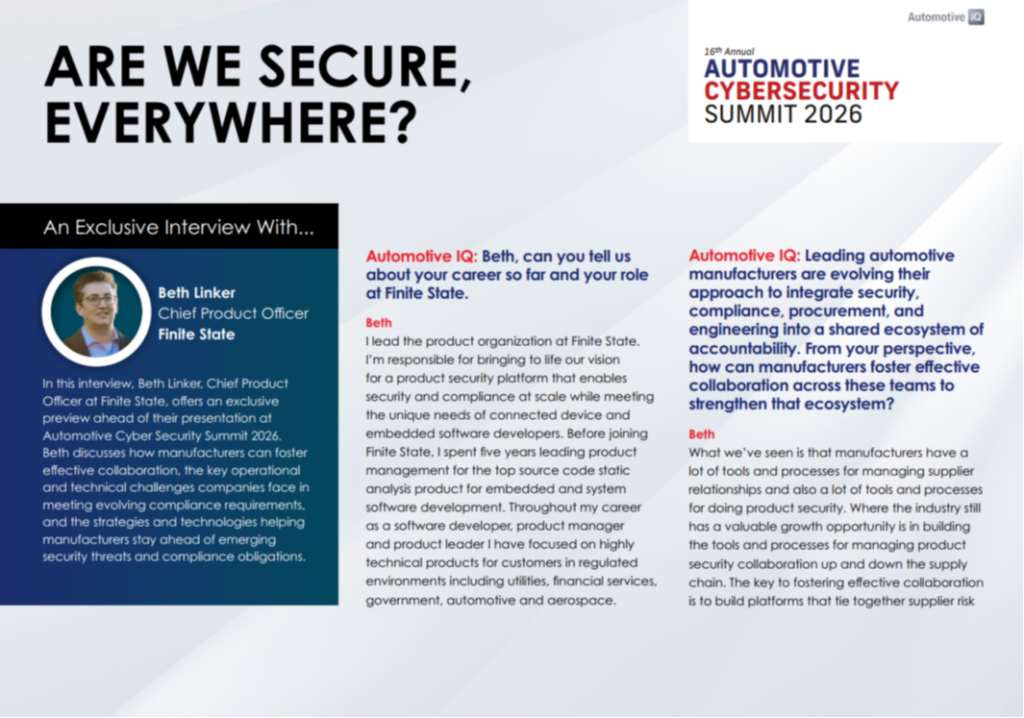
Are We Secure, Everywhere? | Interview with Beth Linker, Chief Product Officer, Finite State
Beth Linker, Chief Product Officer at Finite State, discusses how manufacturers can foster effective collaboration, the key operational and technical challenges companies face in meeting evolving compliance requirements, and the strategies and technologies helping manufacturers stay ahead of emerging security threats and compliance obligations.
"We believe that the key strategy is to unify fragmented security and compliance workflows into an integrated toolchain that can be deployed and scaled in a modular and flexible way. It starts with having a clear data strategy that enables effective adoption of automation and AI."
Driving Competitiveness, Cutting Costs and Ensuring Vehicle Security
SDV manufacturers are embracing cutting-edge technologies, processes, and business models to cut costs while keeping vehicles safe and secure. This article explores how innovations like Edge AI, Cybersecurity Management Systems, the Zero-Trust Model, cybersecurity standards, and Security by Design with DevSecOps are shaping the future of secure vehicle development. It also explores how to strategically meet consumer demand for faster vehicle delivery without compromising product integrity and security.
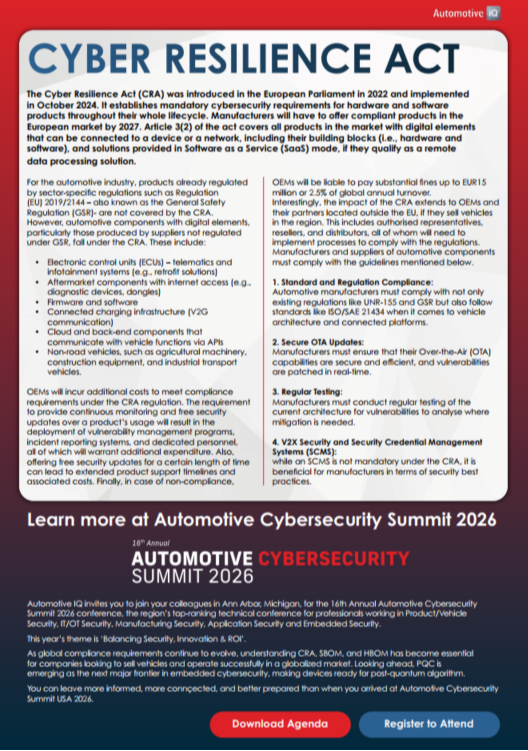
Cyber Resilience Act: Guidelines to Comply
Gain insight into how the automotive industry can align and comply with the Cyber Resilience Act. The guidelines highlight key areas including:
- Standards and regulatory compliance
- Secure OTA updates
- Continuous testing and validation
- V2X security and Security Credential Management Systems
In Partnership With:

QUESTIONS?
Address: IQPC Ltd, 129 Wilton Road,
London SW1V 1JZ
Telephone: 44 (0) 207 368 9300
Fax: 44 (0) 207 368 9301
Email: enquire@iqpc.co.uk

©2026 IQPC. All rights reserved.